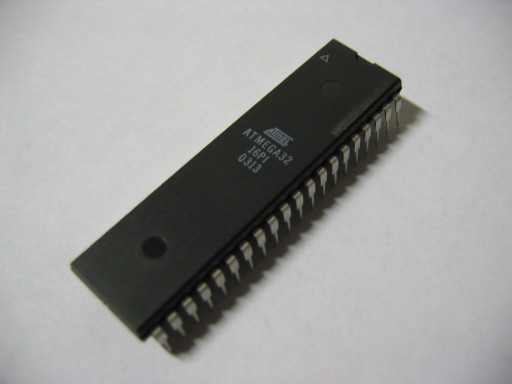
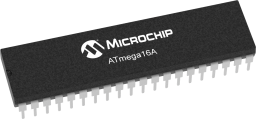
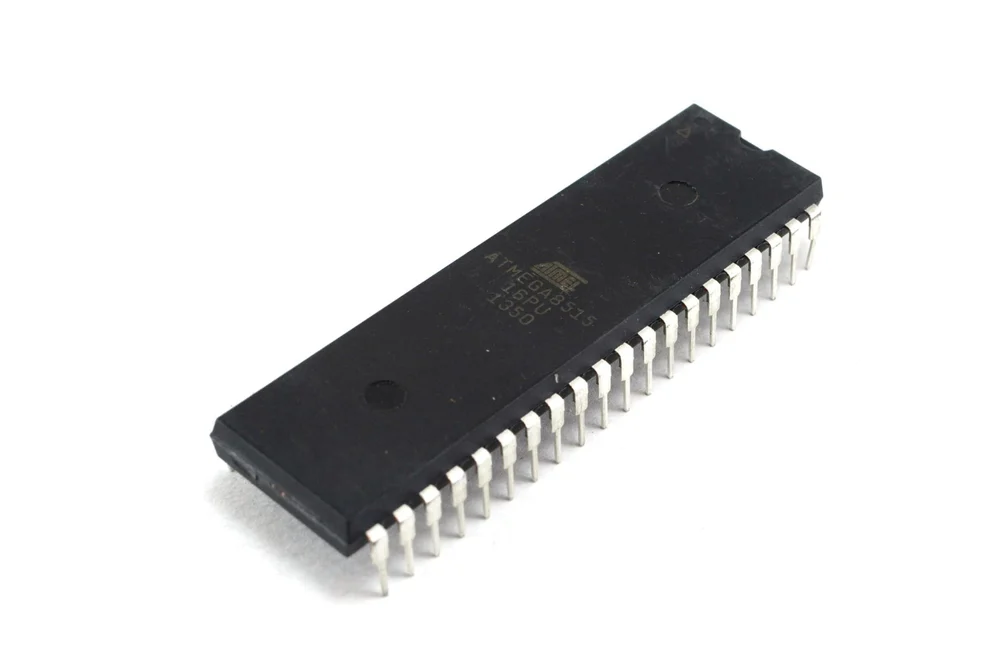
The Atmega 32 is an 8-bit AVR microcontroller from Microchip Technology, known for its high performance and low power consumption. It features a powerful instruction set and a variety of built-in peripherals, making it suitable for a wide range of embedded applications including industrial control, home automation, consumer electronics, and automotive systems. Key Features: 8-bit AVR RISC architecture 32 kB of In-System Self-Programmable Flash memory 2 kB SRAM for data storage 1 kB EEPROM for non-volatile data storage 32 general purpose I/O lines 3 Timers (2 x 8-bit, 1 x 16-bit) 8-channel, 10-bit ADC 4 PWM channels USART, SPI, and I2C communication interfaces Watchdog Timer with separate on-chip oscillator On-chip Analog Comparator Programmable Serial USART Supports external and internal interrupts In-System Programming (ISP) via SPI port JTAG interface for on-chip debugging Technical Specifications: Package Types: 40-pin PDIP, 44-pin TQFP, 44-pin QFN/MLF Operating Voltage: 2.7V to 5.5V Clock Speed: Up to 16 MHz Flash Memory: 32 kB SRAM: 2 kB EEPROM: 1 kB I/O Pins: 32 Timers: Two 8-bit, one 16-bit ADC Resolution: 10-bit ADC Channels: 8 Operating Temperature Range: -40°C to 85°C Applications: Industrial automation Consumer electronics Home automation systems Automotive applications Data acquisition systems Robotics Security systems Usage: Programming: Program the Atmega 32 using a compatible programmer or development kit. Utilize ISP for convenient in-system programming. Peripheral Configuration: Configure I/O pins, timers, ADC, PWM, and communication interfaces via software. Use the integrated peripherals to interface with sensors, actuators, and other devices. Application Development: Write and upload firmware to the microcontroller using development environments such as Atmel Studio. Utilize libraries and example codes to speed up the development process. Deployment: Integrate the programmed microcontroller into your electronic circuit. Ensure proper power supply and signal connections to avoid damage and ensure optimal performance. Caution: Handle the microcontroller with care to avoid damage from electrostatic discharge (ESD). Verify the correct power supply voltage and connections before powering the device. Follow the manufacturer’s guidelines for programming and operation to ensure reliability and longevity. Datasheet: For detailed technical specifications, refer to the Atmega 32 Datasheet. In stock